
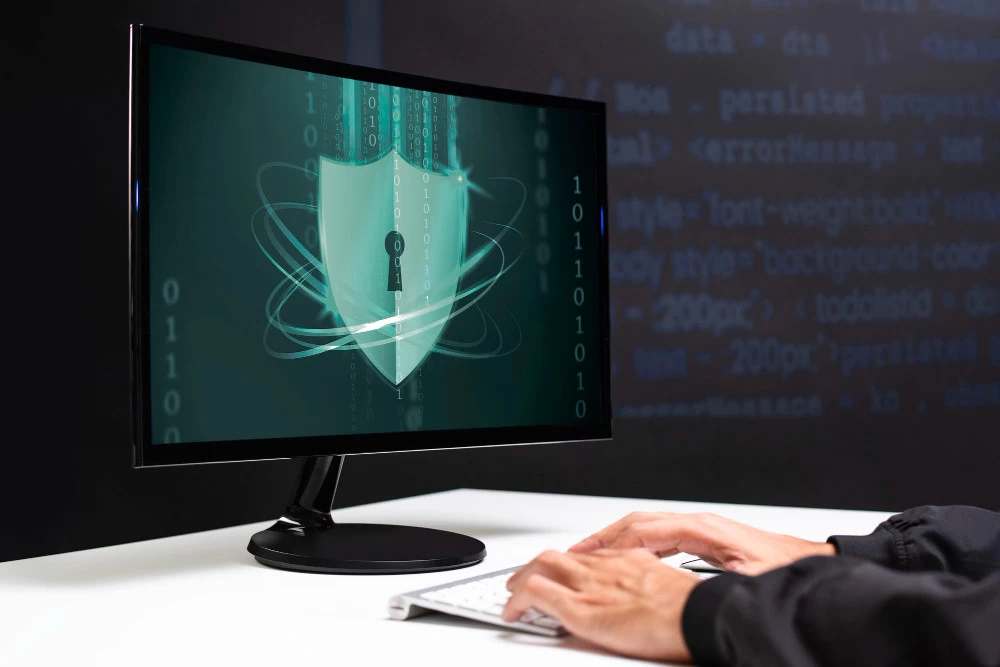
Website security isn’t optional, it’s essential. From protecting customer data to preventing money losses and guarding your reputation, here are four key reasons why investing in website security is vital to your business’s success.
As a business owner, you’ve got a lot on your plate. With so much to handle, website security can easily slip to the bottom of the list. But the truth is, the health and success of your business depend a lot on how secure your website is. If you don’t keep your software updated and protected, you could face costly damage that puts your whole business at risk. How exactly? Let’s look at the four main reasons.
Reason 1, your information and your customers’ information could be exposed
People are more connected than ever. For the services they use every day, they trust a lot of businesses with their personal information, and yours is one of them.
Your website might collect their names and email addresses. If you run an online store, your servers may also hold their payment details, home addresses, birth dates and even Social Security numbers.
If a hacker gets their hands on that information, it would be pretty easy to steal their identity and make fraudulent purchases.
When you make website security a priority, you protect your customers’ sensitive information from data breaches.
Your business assets could be at risk too
Your customers come first, but an unsecured website can also hurt your own business assets.
Cybercriminals can use weak spots in your system to plant viruses on your website that may spread to your computers. If you rely on those computers to run your business, a wave of viruses could knock them out completely.
You’ve probably spent a good amount of money on the right equipment for your business. If a virus takes your system down, you might have to pay a professional to clean your machines, or even replace them altogether.
Reason 2, hacking is on the rise
Websites get hacked every single day. Some estimates put the number at 30,000 to 50,000 hacked sites a day, and cybercrime keeps growing out of control.
Bots make up about 42% of all internet traffic, and there are a lot more bad bots out there than good ones.
That doesn’t mean every attack succeeds. Hundreds of thousands of attacks get blocked and shut down before they cause any damage at all.
That’s good news, because it means you don’t have to be afraid to do business online. Hacking is a very real risk, but in most cases you can lower it a lot with the right technology and the right game plan.
Here’s a bonus. Building a reputation as a trustworthy business with a secure website can be priceless when one of your competitors gets hacked.
Standing out from other businesses by putting security first can actually help you sell more.
Reason 3, lost revenue
Yes, you’ll probably lose money if you get hacked. If customers don’t trust you, they’ll stop buying from you. But let’s dig a little deeper.
Your reputation. People want to do business with companies they trust. If you have to tell your customers that you had a data breach and their financial information may have been exposed, they’ll think twice before coming back.
And if your business is fairly well known, the breach could even end up in the news. That’s terrible publicity for you and your business. You wouldn’t just lose your current customers, you’d lose future ones too.
Browser warnings and blacklists. If your site gets flagged as a security risk, you’re seen as a danger not only to customers but to other websites as well.
Web browsers will start warning potential customers that your site isn’t safe and push them to go somewhere else. And just like that, you’ve lost a sale.
That’s assuming people can even find your site in the first place. Google and other search engines regularly push down sites that are considered dangerous. After all, if hackers plant harmful code on your site, it can spread to other sites without you even knowing.
That means your site gets blacklisted, and potential customers can’t reach your business anymore, even though it wasn’t your fault.
Lost sales. Every one of the situations above can hit your sales in a different way.
If your customers are affected, they’ll leave. If your equipment is affected, you’ll lose a lot of productive time fixing the problem. If your reputation takes a hit and you disappear from search results, you won’t find new customers.
All of that adds up to lost revenue for your business.
Reason 4, cleaning up is expensive
Recovering a hacked website is possible, but it can get expensive fast.
Once malware gets onto a WordPress site, for example, the owner has to hire someone to remove the harmful code and then check every corner of the site to make sure it’s clean and safe to use. When you’re paying hundreds of dollars just to clean up a small piece of code, you’ll wish you had taken a proactive approach and put the right protection in place before it ever happened.
How to protect your website
As a small business owner, cybersecurity needs to be a priority. But you probably don’t want to spend all your time figuring out the technical side or learning how to code.
What you really need is to make sure your site is monitored and cleaned on a regular basis. Keep your software, themes and plugins up to date, use an SSL certificate, set up daily malware scans and automatic backups, and protect admin accounts with strong passwords and two step login. That keeps the data stored on your site safe for your customers and for you.
If you’d rather not deal with any of this yourself, a website maintenance plan from a trusted web agency can take care of it for you, so you can focus on running your business.
Reason 4, cleaning up is expensive
Recovering a hacked website is possible, but it can get expensive fast.
Once malware gets onto a WordPress site, for example, the owner has to hire someone to remove the harmful code and then check every corner of the site to make sure it’s clean and safe to use. When you’re paying hundreds of dollars just to clean up a small piece of code, you’ll wish you had taken a proactive approach and put the right protection in place before it ever happened.
How to protect your website
As a small business owner, cybersecurity needs to be a priority. But you probably don’t want to spend all your time figuring out the technical side or learning how to code.
What you really need is to make sure your site is monitored and cleaned on a regular basis. Keep your software, themes and plugins up to date, use an SSL certificate, set up daily malware scans and automatic backups, and protect admin accounts with strong passwords and two step login. That keeps the data stored on your site safe for your customers and for you.
If you’d rather not deal with any of this yourself, a website maintenance plan from a trusted web agency can take care of it for you, so you can focus on running your business.